The complete 192.168.1.1 guide
192.168.1.1 is a private address that some routers use for their administration interface. It is useful only when your own equipment uses it. Open the address from the router’s local network, then confirm the model on the sign-in page before entering your administrator credentials.
Common address typing mistakes
Why does 192.168.l.l not open?
Searches such as 192.168.l.l, 192.168 l 1.1, 192 l.168.1.1, 19216811, 192.168.l.1, 192.1681.1, 192.168 1.1 can contain letters, missing dots or extra characters. If you mean 192.168.1.1, enter that exact address in the browser address bar. Use digits and dots; the letter l is not the number 1, and the letter o is not zero.
First check that your device lists 192.168.1.1 as its gateway. A similar-looking search does not establish your router's address or password.
Important for this address
For a first setup, confirm the Internet connection before changing Wi-Fi settings. Keep the provider’s connection details and a configuration backup available. Changing the Wi-Fi name or password disconnects devices using the old settings.
What is 192.168.1.1 used for?
Router manufacturers and internet service providers often assign a private IP address to the router as a management endpoint. When you visit 192.168.1.1 in your browser, you are not going to “the internet”—you are opening a local page hosted by your router. This is why it typically works only when you are connected to that router’s network.
- Wi-Fi setup: change SSID (network name), password, encryption (WPA2/WPA3), and channel settings.
- Internet setup: configure WAN type (DHCP, PPPoE, Static), VLAN/ISP parameters, and connection diagnostics.
- Network management: DHCP server ranges, LAN IP settings, DNS, IPv6, and device list monitoring.
- Security & access control: admin password, firewall rules, MAC filtering, parental controls, and guest Wi-Fi.
- Advanced features: port forwarding, DMZ, VPN, QoS/traffic shaping, logs, backups, and firmware upgrades.
Before you begin
To avoid the most common 192.168.1.1 login problems, confirm these prerequisites before troubleshooting deeper:
- Make sure you are connected to the router you want to manage (correct Wi-Fi network or Ethernet cable).
- Try a private/incognito window to avoid cached redirects or saved credentials interfering with the login.
- If possible, use Ethernet for initial setup—wired connections eliminate Wi-Fi interference as a variable.
How to login to 192.168.1.1 IP?
The steps below are designed to be practical for everyday users, while still reflecting how a network technician would approach the same workflow. They cover both initial access and the most common edge cases (wrong gateway IP, credential confusion, and unreachable panels). Note: people often confuse the number 1 with the letter l. The correct address is 192.168.1.1.
-
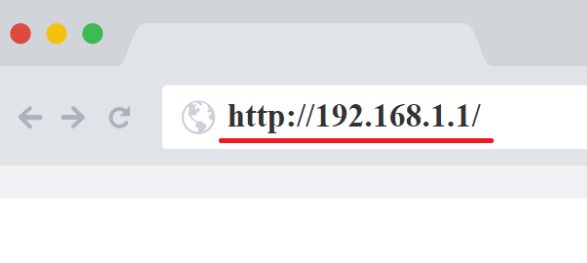
Open your browser and navigate directly to the router admin page: http://192.168.1.1. If you prefer typing, enter "192.168.1.1" in the address bar (not the search box) and press Enter. A successful connection typically shows a login prompt, a setup wizard, or a branded router dashboard.
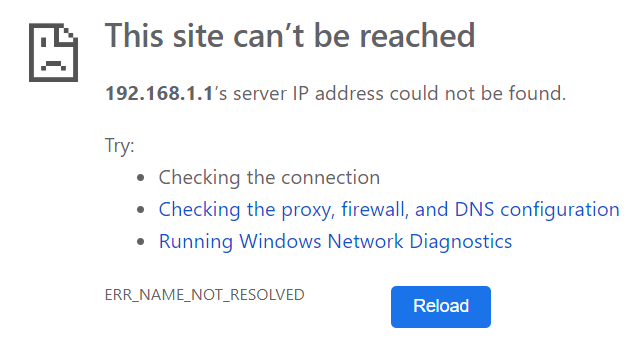
If your browser suggests searching the web instead of opening the page, it usually indicates a typo or that you are not connected to the router’s network.
-
If the page is unreachable, your router’s gateway may be a different private IP address. This is extremely common with ISP gateways and certain router families. Popular alternatives include: 192.168.0.1, 192.168.1.254, and 10.0.0.1.
To identify the correct gateway quickly, use our online tool "Router IP Finder" or follow the manual methods explained in this article. Once you confirm the correct gateway IP, use that address in your browser instead of 192.168.1.1.
Tip for consistent results: test the gateway IP while connected to the same router, and avoid mobile data, guest Wi-Fi isolation, or captive portals that can block local access.
-
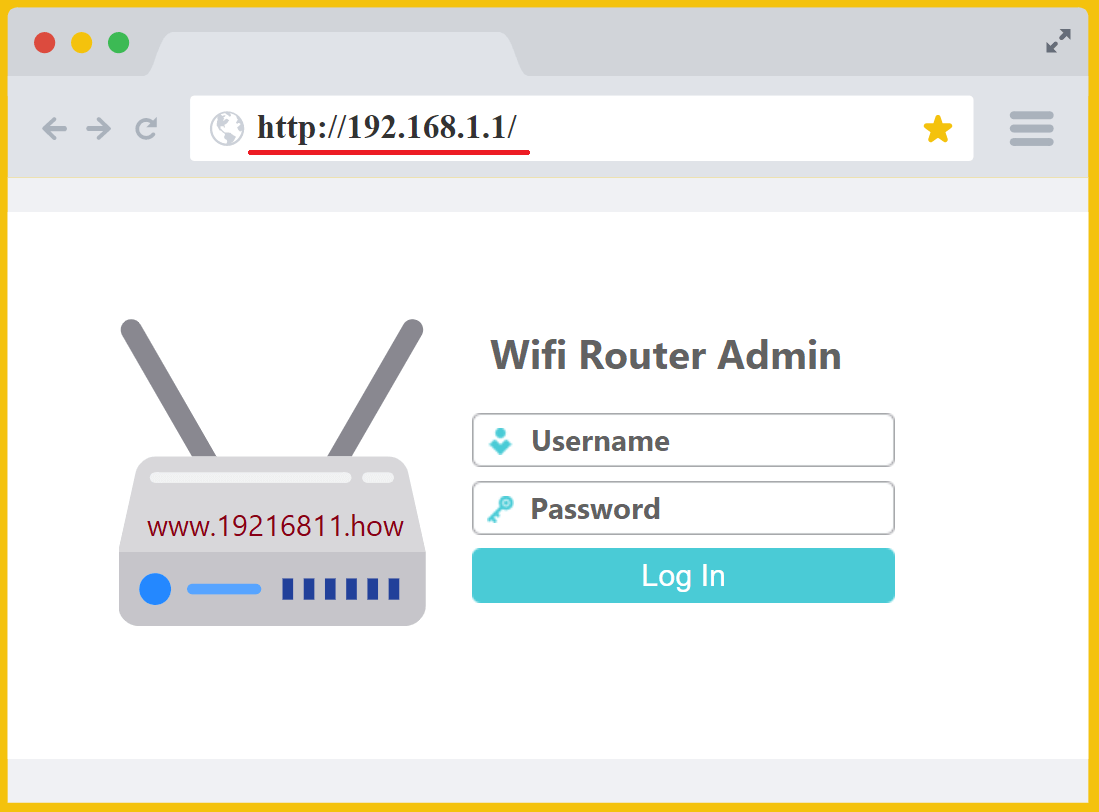
When the admin panel loads, you will see a login screen asking for a username and password. Use the router’s administrator credentials. If you previously changed the password and forgot it, consult your password recovery/reset guidance (often listed as "forgot password" or documented by your ISP or router brand).
If this is a fresh setup—or the credentials were never customized—use the Default username and password for your model. Many devices print these on a label on the router (sometimes as “Admin Password” or “Web UI Password”). Some newer routers require you to create an admin password during first-time setup, so there may be no universal default.
For security, avoid leaving default credentials in place after you successfully sign in. A unique admin password is one of the highest impact improvements you can make.
-
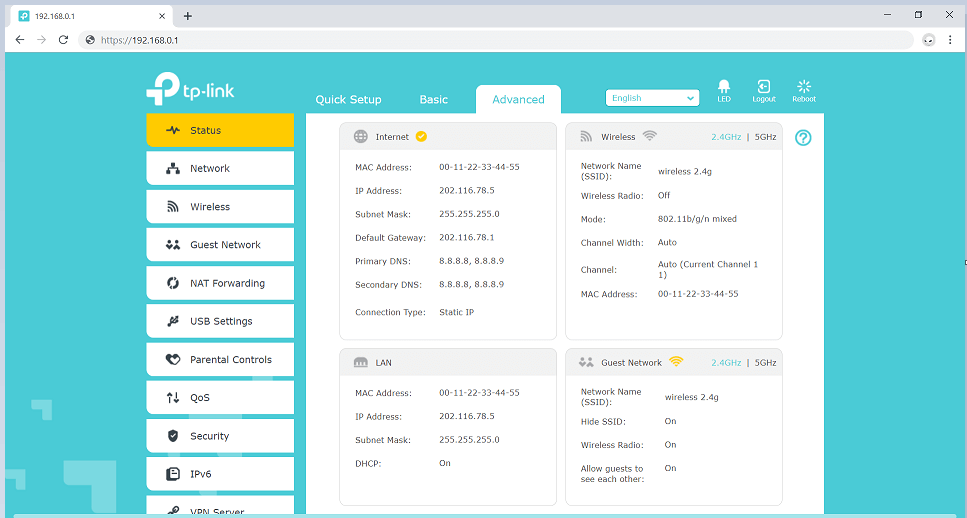
Once you log in successfully, you can configure your router settings. Apply changes carefully, and after major modifications (such as WAN type, PPPoE credentials, or LAN IP changes), expect a brief reconnection. If the router reboots, reconnect to the Wi-Fi network and reopen the admin panel as needed.
Best practice: after confirming everything works, save a configuration backup from the router interface. This makes recovery much faster if a reset is ever required.
Common router tasks after you sign in
Change Wi-Fi name and password
For most users, the first priority is updating the Wi-Fi network name (SSID) and setting a strong password. Use WPA2-PSK (AES) or WPA3 when available, and avoid outdated encryption methods. If your router offers separate SSIDs for 2.4 GHz and 5 GHz, consider naming them clearly or enabling band steering for simplicity.
Confirm internet (WAN) settings
If your internet is not working, confirm the WAN connection type. Many ISPs use DHCP, while others require PPPoE credentials or VLAN tagging. The admin panel typically shows whether the router has obtained a public IP, DNS servers, and a working gateway.
Set DNS for performance or filtering
DNS changes can improve perceived responsiveness or enable family-safe filtering. You can set DNS at the router level so all devices on your network use the same resolver, rather than configuring each device individually.
Enable guest network and isolate visitors
A guest network is recommended for visitors and IoT devices you do not fully trust. If your router supports guest isolation, enable it so guest devices cannot access your main LAN devices (printers, NAS, smart hubs).
Firmware update and configuration backup
Firmware updates often include security patches and stability improvements. After updating, confirm Wi-Fi connectivity, then save a backup. If you ever need to factory reset the router, restoring a backup dramatically reduces downtime.
Port forwarding, UPnP, and DMZ
For gaming, cameras, remote access, or hosting services, you may need port forwarding. Use the narrowest possible rule set (specific ports to a specific internal IP). Avoid DMZ unless you understand the security implications. If UPnP is enabled, monitor it and disable it if not required.
QoS and speed limiting
Quality of Service (QoS) helps prevent a single device from saturating the connection. If your router supports traffic prioritization, you can improve video conferencing and gaming stability by prioritizing real-time traffic.
Troubleshooting 192.168.1.1 login issues
Issue: The login page does not load
- Confirm you are connected to the router’s network (Wi-Fi/Ethernet) and not using mobile data.
- Try a different browser or an incognito/private window to bypass cache and stored redirects.
- Compare the problem on another device connected to the same router, or use Ethernet. If a VPN changes local routing, check its local-network access setting or your organisation’s policy. Do not turn off DNS protection or the firewall just because a numeric IP page does not load.
- Verify the correct gateway IP using "Router IP Finder" or the manual method article.
- Reboot the router if the admin interface is frozen, and wait until the device is fully online before retrying.
Issue: The login page loads but credentials are rejected
- Check for brand-specific labels (admin password vs. Wi-Fi password; they are often different).
- Confirm you are logging into the router, not a repeater/mesh node with different credentials.
- If credentials were changed and lost, use the documented reset process (factory reset as a last resort).
Issue: Settings do not save or the panel behaves inconsistently
- Ensure you are not connected through a guest network that blocks administration access.
- Try a different browser; some older admin panels are sensitive to extensions and content blockers.
- After major changes, allow time for the router to apply settings; some changes trigger a restart.
Security recommendations for router admin panels
A router is effectively the security perimeter of a home or small office network. After you regain access to the admin panel, apply these baseline improvements to reduce risk and improve reliability:
- Change the admin password to a unique, strong value (different from your Wi-Fi password).
- Disable remote management unless you absolutely need it.
- Use WPA2/WPA3, disable WPS if not required, and set a strong Wi-Fi passphrase.
- Keep firmware up to date and back up your configuration after stable setup.
- Review connected devices and remove unknown clients.
How to find your router IP address
Find the active default gateway in your device’s network settings. A failed browser request does not prove that a router exists at an address, and an unresponsive page does not prove that it is offline. Use the gateway guide below to verify the address independently.
Before changing settings
Change one setting at a time and keep the previous value. Back up the configuration if supported; the backup can contain private network information. After saving, verify the connection from a device you control. If access is lost, return to the last known working configuration before making more changes.
Frequently asked questions
Is this the right IP address?
Check the default gateway in your device’s network settings. Your router may use an address other than 192.168.1.1.
Why won’t the admin page open?
Compare the problem on another device connected to the same router, or use Ethernet. If a VPN changes local routing, check its local-network access setting or your organisation’s policy. Do not turn off DNS protection or the firewall just because a numeric IP page does not load.
Forgot your admin password?
Check the device label, saved passwords and provider documentation first. A factory reset is a last resort because it may erase Internet credentials, Wi-Fi settings and custom rules. Prepare the recovery details before following the manufacturer’s model-specific instructions. A normal restart is a different operation.